Thursday, January 02, 2014

add 0683 Son House

After being rediscovered by the folk-blues community in the early '60s, Son House rose to the occasion and recorded this magnificent set of performances. Allowed to stretch out past the shorter running time of the original 78s, House turns in wonderful, steaming performances of some of his best-known material. On some tracks, House is supplemented by folk-blues researcher/musician Alan Wilson, who would later become a member of the blues-rock group Canned Heat and here plays some nice second guitar and harmonica on several cuts. This two-disc set features alternate takes, some unissued material and some studio chatter from producer John Hammond, Sr. that ocassionally hints at the chaotic nature inherent to some of these '60s "rediscovery" sessions. While not as overpowering as his earlier work (what could be?), all of these sides are so power packed with sheer emotional involvement from House, they're an indispensable part of his canonade.

aCá

add 0682 Slim Harpo


aCá

add o681 Rudi Protrudi

Rudi Action Protrudi (born December 15, 1952) is an American rock musician, songwriter, record producer, artist and actor best known as the lead vocalist and frontman of the rock and roll band The Fuzztones.
Rudi Protrudi was born in Washington D.C. and raised in Camp Hill, Pennsylvania. Both he and his younger sister, Rene Laigo, inherited their artistic talent from parents, John and Janet. Rudi attended school in Camp Hill, Lemoyne and New Cumberland, where he graduated from Cedar Cliff High School in 1970. He attended York Academy of Art from 1971 to 1972. At the age of 12, after seeing The Beatles on The Ed Sullivan Show, Rock & Roll became his obsession. Through The Beatles, he became familiar with Chuck Berry, who quickly became his idol. Like Berry, Rudi chose guitar as his instrument, and by the age of 14 had formed his first band, King Arthur's Quart. He continued to play in local bands until 1976 when an audition for the Dead Boys provided him the opportunity to play bass for them at CBGBs. But a future with the Dead Boys was not his fate. Soon after he founded Tina Peel with then girlfriend/live-in partner, Deb O'Nair and they moved to New York in 1977, where their serious music careers started.

Tina Peel

Bubblegum-Punk band, formed in 1976. Rudi says, that this band was heavily influenced by The Monkees, Cryan' Shames, 1910 Fruitgum Company and Dave Clark 5.[1] It is also Rudi's first band, where he performed as frontman. Rudi wrote or co-wrote the majority of the original material recorded by Tina Peel with then members Deb O'Nair, Jim Nastix and Jackson Plugs. Dave U. Hall (ex-bassist from Birdland with Lester Bangs) replaced Jim Nastix after his tenure with the band. Dave went under the name Rick O'Shea. Soon, they became a popular NYC attraction, often headlining the major clubs of the time (Hurrah, Irving Plaza, Ritz, CBGB), as well as appearing on several television shows, including the cult favorite, The Uncle Floyd Show. Even though the band was courted by major labels, and enjoyed frequent press, Tina Peel broke up when members Rudi Protrudi and Deb O'Nair went on to form The Fuzztones in 1980

aCá

add 0680 Southern Culture on the Skids

Those who like their music on the humorous side will more than enjoy the raucous seventh release from Southern Culture on the Skids. To label this North Carolina-based quartet under the category of Southern rock would be limiting. On Liquored Up and Lacquered Down, Southern Culture on the Skids melds different styles into its core Southern rock sound and breaks many traditional rules of the genre. One of the talents of Southern Culture on the Skids lies in its ability to musically venture way out there -- industrial-like processed vocals, high-reverb surf guitar, Spanish-style horn parts, and other un-Southern rock-like treatments -- and bring the songs back home. It's the kind of cohesiveness found among groups who've developed a synergy from years of playing together. Liquored Up and Lacquered Down is an example of true ensemble playing, where the parts all effortlessly work together, no matter how far out the musicians take them. "Pass the Hatchet" combines '60s-style shag music, psychedelic rhythm lines, and a shuffling snare drum inherent to rockabilly. This is a party song that can easily fit in on a movie soundtrack, à la Austin Powers. The collection does take a turn to the minimalist side in "Over It," which features mostly bone-dry parts, with perhaps a bit of reverb on the vocals and guitars. It's a real tribute to '50s rock & roll. On the set's choicest number, "I Learned to Dance in Mississippi," industrial-style distorted guitars and vocals meet rollicking country music; another example of the band's adventurous and eclectic nature. It's no coincidence that a group named Southern Culture on the Skids writes songs about drinking, drinking, and more drinking, in a variety of milieus. But it all comes off as harmless banter thanks to the honky tonk party music. Co-lead singers Rick Miller (guitar) and Mary Huff (bass) resemble the Big Bopper and Grace Slick, respectively, on some songs, and rival the vocal antics of Fred Schneider and Kate Pierson of the B-52's. There are no radio hits here, but that's only because there really aren't many stations that support this kind of offbeat, genre-straddling Southern rock music. However, Liquored Up and Lacquered Down would be right at home in bars, Karaoke clubs, jukeboxes, and the CD collections of those who like off-the-beaten-path Southern rock party music

aCá

Wednesday, January 01, 2014

add 0679 Medeski, Scofield, Martin & Wood

Out Louder reunites keyboardist John Medeski, drummer Billy Martin, and bassist Chris Wood with guitar great John Scofield, who employed the trio on his 1997 A Go Go album. That record opened the creativity gates for both the trio and Scofield, who fed off and goaded each other into territories neither party had previously gone separately. Out Louder isn't so much a rematch as an upgrade. Both Scofield and MMW have continued to explore in the near-decade since A Go Go, and they come to this project with a greater understanding of their collective abilities as well as a willingness to explore the possibilities further. Not unexpectedly, the four musicians work hard here, but they also have a ton of fun. The opening track, "Little Walter Rides Again," serves notice that this isn't going to be an exercise in showing off but rather four envelope-pushing musicians picking each other's brains and seeing what they find. An easygoing blues vamp with a funky, Memphis-style beat, the track keeps the quartet reined in while simultaneously allowing each musician to dance around a bit within its structure. That idea of holding back doesn't last long, however, as that leadoff gives way to "Miles Behind," a nod to electric Miles Davis minus the trumpet. Although the players, particularly Medeski and Scofield, take several opportunities to reach for the outside fringes, Out Louder never becomes inaccessible, even during its freer-jazz moments. "Tequila and Chocolate," for example, takes up with a simple bossa nova rhythm that eventually goes wildly astray without losing touch with its form, and the John Lennon tune "Julia" (which, honestly, borrows only minimally from the original melody) is a soft, sweet, and sensual ballad that never strays even close to the edge yet still manages to feel edgy. That's not to say that those looking for the heavy jams will be disappointed. "What Now" finds Medeski and Scofield challenging each other as if they were Keith Emerson and Jimi Hendrix having it out at some late-night club, and "Down the Tube," though essentially a simple funky blues, flirts with psychedelia, Scofield turning in some of his most startling playing of the set. The session ends with a virtually unrecognizable improv on Peter Tosh's reggae anthem "Legalize It" that spotlights Martin and Wood in lockstep groove. If ever MMW and Scofield decided to make something more permanent of their meet-ups, one can only guess where else they might go.

aCá

add 0679 old crow medicine show

Similar to their first album, Big Iron World sees Old Crow Medicine Show draw upon the spirit of old-timey American string band music, adding a surprisingly refreshing and youthful flair that breathes new life into what's traditional as well as harnessing a sound of their own. The group once again teamed up with David Rawlings who produced and performed on the album, co-writing five of its 12 songs. Rawlings musical other half, Gillian Welch also appears here, trading in her guitar and signature vocals for a pair of drum sticks. The first single from Big Iron Worldis an upright bass and harmonica-heavy, moaning ballad called "Down Home Girl" -- written by Arthur Butler and Jerry Leiber (the latter being responsible for such hits as "Yakety Yak," "Hound Dog," and "Jailhouse Rock"). Of course, Old Crow Medicine Show makes the tune their own, with slide guitar and Willie Watson's nasally mountain-style vocals, accentuated perfectly by the close harmony range of his bandmates. Big Iron World is a flourishing a mixture of backwoods crooners, bluegrass-tinged rockers, and crooning backwoods bluegrass-tinged rockers. There's the Highway 61 Revisited-era Dylanesque "Bobcat Tracks" and the jumping "James River Blues" both with irresistible fiddle breakdowns and perfectly executed vocal harmonies. Just as the songs "CC Rider" and "Poor Man" from Old Crow Medicine Show's debut showcased their unique vocal abilities, here they exhibit an ability to kidnap their listeners from the hustle and bustle of modern life and take them back to the good old days that neither they, nor the band, were born early enough to know. Big Iron World has its fair share of songs that offer bleak and bittersweet atmospheres. The ominous yet weary "Don't Ride That Horse," and the spiritually reverent "God's Got It," could carry themselves even if they were sung a cappella. The album's overall rainy autumn day feel isn't without its upbeat moments and humor, though. "Cocaine Habit," much like the debut album's "Tell It to Me," is a catchy harmonica-driven ode to cocaine abuse. It's followed by the rollicking "Minglewood Blues" which shows the genius achieved from melding bluegrass and blues -- not to mention the genius of Watson's distinctive howl that sets it apart. What it proves is that Big Iron World is no less worthy of praise than their debut,and furthers the band's position as one of the better neo-traditionalist string bands of the early years of the 2000s.

aCá

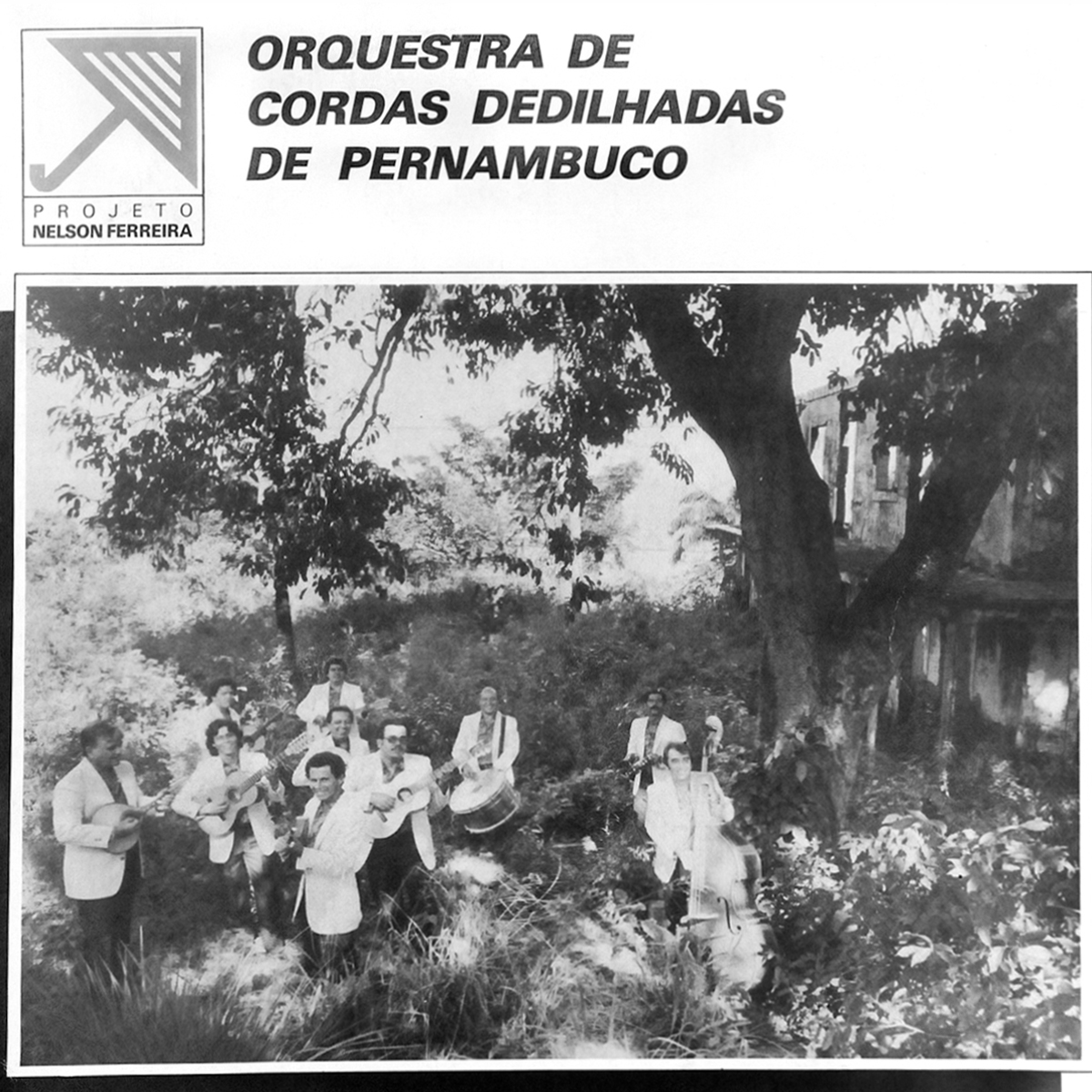
add 0678 Orquestra de Cordas Dedilhadas

Dados Artísticos

Grupo criado por Cussy de Almeida na década de 1980, onde misturou três violas sertanejas a três bandolins, cavaquinho, violão, percussões e contrabaixo.

O grupo lançou um LP pela Funarte com produção artística de Maurício Carrilho, e que mais tarde foi relançado em CD. A Funarte publicou ainda um livro com os arranjos. O grupo dá continuidade a um trabalho iniciado na década de 1970 pela Orquestra Armorial, no sentido de fazer renascer a música nordestina, e conta com ex-integrantes da orquestra, como Ivanildo Maciel e Henrique Annes. Vem realizando apresentações não só no Nordeste como também em outras regiões, podendo citar o concerto realizado no Centro Cultural do Banco do Brasil, Rio de Janeiro, na década de 1990. Participou também do CD "Capiba", lançado pela Funarte, no qual interpretou as músicas "Eu quero é ver", "Cem anos de choro", "Sem lei nem rei", "É de tororó", "Nação Nagô", "Eh! Luanda", "Um pernambucano no Rio" e "Valsa verde", todas de autoria do compositor pernambucano homenageado na ocasião de seus 80 anos.

aCá